Thursday, 1 March 2018

Ahhh, Hope For Youth!

On Wednesday, I travelled to the Hope For Youth School some 15-20 minutes from my hotel.  I had visited this school on my last trip to Uganda with the CanAssist crew.  The school impressed me then and continues to impress.  The school, while quite dilapidated, gives the impression of good management.  The students are bright and vigorous.  They were genuinely happy to welcome me back.  I told them in 2016 that I would be back.  Now they know that I am true to my word.
This dilapidated school is currently being replaced with a new facility.

Open to the elements

I was pleased to see that the teacher's quarters was now fully occupied and even contained a sick bay unit.  The new school, our most recent project, is currently under construction and we are actively seeking donors to complete one new classroom at a time.
Teacher's quarters opened in 2016


Two female teachers who share one unit.

The start of the new school.


I was well received with song and dance (not necessary for me, but it is their custom).  I was able to see how the school has developed since my last visit.  The teacher's quarters that we opened on my last visit are now fully occupied and one unit has a sick bay.  The school is now raising rabbits, chickens and pigs on a fairly large scale.  These animals allow for supplements to the children's feeding program and are also sold at local market to help support the school.  The water tanks and latrines are still fully functional.  The students appear healthy and robust.  Most or all wear shoes, something that John insisted on.  Concrete floors and shoes mean that children are no longer troubled by jiggers.


The drummers

The choir

Traditional Dancers


After a full tour of the grounds, I was lead into one of the old classrooms.  The choir and dance teacher had the students well prepared and they performed a number of songs and dances.  After the performance the children had lunch and recess and we were free to converse.  Here is what I wrote on Facebook to describe what happened next.

The final image I want to leave you with tonight my friends is one that you need to conjure as there was no way for me to document it. After the students performed we went outside and I went and sat on the ground. "Come and talk to me", I called. They came. Soon I was in the middle of a "kid crush". I felt like the heart in the centre of a living and vital organism. It was, as if, the children were one. It is hard to describe the experience but I looked up and all I could see were children's faces and a small patch of blue sky. Like a dream. Close your eyes and imagine it.

I was so delighted to find two girls who had made a big impression on me on my last trip.  Hanifah and Rhoda are doing well. Rhoda is in P7 and wants to be a lawyer. Hanifah is in P6 and wants to be a nurse. In the picture below Hanifah has the yellow shirt and Rhoda is in red.  I am proud of these girls and the young women they are to become. They are the future!
Hanifah in yellow on the left, Rhoda in red on the right.

I also had the opportunity to visit with Edward who I had met in 2016 and Venna a former H4Y student who was financially assisted to attend University by two CanAssist supporters.  It was a great visit and a testament to what can be accomplished when we all pull together.  Together we are stronger!
Edward

Venna
Before I left I was given some lunch consisting of rice, beans, pork and carrots.  I toured the new kitchen funded by CanAssist in memory of Dennis Sserugo who was killed tragically just after my last visit.  He played a whistle for us during a dance performance so the kitchen has been named the "Whistle Stop".  After that, a few quick pictures and my visit had come to an end.


Hanging out with the teachers.


Kyabazaala Elementary School Visit

On Tuesday I travelled about 90 minutes north east of Seeta to visit a very poor rural school which has received CanAssist support, the Kyabazaala School.  The school suffers from high enrolment, little financial support, poor infrastructure and a changing teacher base (teachers find better jobs elsewhere).  The government of Uganda posts teachers to the school but they do not want to stay if there is nowhere to live.  That makes retention rates very low.   Hence, our last offer of support was for the construction of a teacher's quarters.  CanAssist had previously funded latrines, water catchment and an electrical connection as well as some concrete flooring in the school to reduce the incidence of jiggers.

When I arrived I discovered that the school was still functioning but they had been unable to complete the teachers' quarters due a funding shortfall.  They had gone to the parents and came up with a plan to finish the project (6 panes of glass) over the three term school year.  One year later and only two window panes had been installed.  "We have failed.", was the message I got.  Never one to accept defeat we developed a plan to get the project done.  Currently two units are filled and once we complete the final 4 units the building can be fully occupied.  To put this in perspective, the difference is only a matter of hundreds of dollars.  Humbling indeed.  They have also requested adding electricity to the building which only makes sense.  I am determined to get this project finished and to return one day to see the building fully occupied.

On the same day I went to the neighbouring Secondary School.  They have also received CanAssist support and appear to be faring better.  I was impressed with their school mission statement posted on the entryway gate.

Kyabazaala School

Water catchment funded by CanAssist

Kitchen stove

Teacher's Quarters


The Deputy Head Teacher lives here.


Lugali Borehole


The last borehole well was still in construction.  As you can see the cement has been poured and when it is dry in about a week the pump will be added.  These women in the village appear to be patiently waiting.

Shadrak reveals the cement structure.

Patience is a Virtue!

Namasumbi Tour

After visiting the site of first borehole we set off down the road again to the site of the second well.  Here is a short video clip which indicates just how rural the area is and what the road conditions are like.
https://youtu.be/_zxFtCwH0hg

The second well was located adjacent to a school and it was functioning well.  The head teacher brought the students out to show me how it worked and to share their appreciation.  This water not only serves the school but also the entire community.


Wednesday, 28 February 2018

Namanganga Community Farm

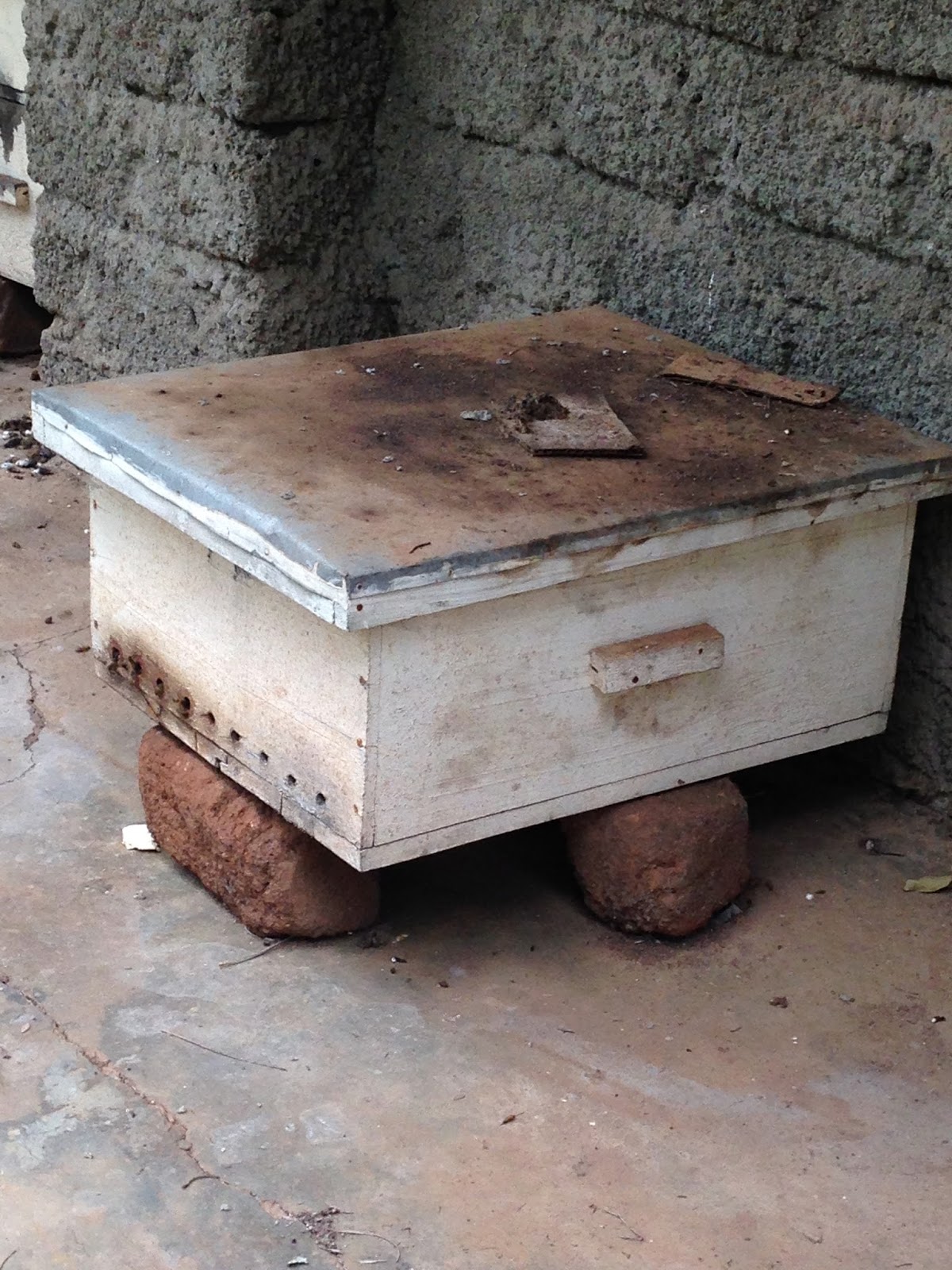
By funding the well, the Namanganga community has been able to pursue some income generating projects, including brick making, a farm which grows crops and raises livestock such as chickens, goats, pigs and cows.  Most impressive to me was the Bee Farm located on the premises.  They are able to produce honey to sell on the market.  All produce and animals provide food for the village and the excess is sold at market.  This allows the community to buy needed items, pay school fees and continue their community development.


CanAssist African Relief Trust: Borehole wells

As much as I loved the opportunity to see the wild mountain gorillas in their natural habitat it has been more rewarding to have the opportunity to work with the people of Uganda.  My involvement with CanAssist as a trustee and project manager affords me the opportunity to visit rural areas that are off the beaten track.  These are the real people of Uganda.  This past week I have had the opportunity to tour 6 different projects and will visit one more tomorrow.

I am pleased to report that CanAssist is leaving a marked impression.  Our infrastructure work in the areas of sanitation, water, health and education are making a huge difference in the communities within which we have provided support.  Repeat trips (this is my third trip to Uganda) allows me to see that once a hand up is given the community can continue to progress and thrive in a multitude of ways.    To put all that I have witnessed into one blog entry would be to fill multiple pages so I will separate it out.  Todays blog will be about borehole wells

On Monday I travelled with my driver, Robert, and Shadrak from EACO, a local community leader who works to find support for needy local communities.  He applied to CanAssist African Relief Trust for funds to repair 3 borehole wells.  I will let his words explain the significance of access to clean and safe drinking water.


Thank you CanAssist African Relief Trust for supporting our communities in access to safe and clean water, these water wells in Mukono, are significantly improving the health and wellbeing of residents. The clean water initiative is directly impacting the following four areas:
Poverty:
• Shorten distance to nearest clean water source by up to 9 kilo meters
• Free ~15 additional hours per week for those who hold the burden of fetching water
Education: Foster higher education and increase literacy by giving more children the time to attend school and study
Health: Reduce cases of water-borne diseases including typhoid fever, bilharzia, malaria and diarrhea
Safety: Prevent incidents of abuse and torture including rape, kidnapping, child sacrifice and mutilation.

So, it is more than just water.  A well benefits a community in a multitude of ways.  As a trustee and project manager I am afforded the opportunity to help these communities to improve their lives.  A humbling experience!  Here are photos of the three wells that I visited.

Well at the Namanganga Community


Well in Namasumbi located adjacent to a school.
https://youtu.be/MO0k_wZNsac

Well in construction in Lugali.  

Tuesday, 27 February 2018

Close encounters of a Gorilla kind!!!

The internet speed seems more favourable this morning so I was able to upload a few videos to Youtube and I will attach them below.  These three clips were filmed on my iPhone with no zoom.  All shots are live and up close and personal.  In the first clip, when the mother gorilla leaves the screen she actually brushed up against my leg.  People have asked me if I was afraid.  The true answer is no.  The gorillas are a peaceful animal and very much habituated to humans.  I did hear that another trekking group was charged by a silverback but it didn't amount to anything, just a signal to stay back.  That gorilla family was one of the new ones and was not as well habituated as the two groups I saw.  Right or wrong, the habituation process means that humans can witness the majesty of the gorilla, a portion of park fees goes towards conservation and of course education is the answer to most problems.  The gorillas are an endangered species, largely due to the fact they can only survive in this small microclimate, the Bwindi Impenetrable Forest.

Watch and enjoy!

https://youtu.be/-_y45PveOxM


https://youtu.be/RB3LOA1lrVA

https://youtu.be/SMcN2zlI7uI